
| |||||||||
Preschool Songs and Nursery RhymesPreschool songs and rhymes offer many life-long benefits to children. Teach them preschool fingerplays, action rhymes, counting rhymes, games with rhythm and more. 
Preschool songs and nursery rhymes - "they are the first furnishings of the mind; the bottom-most layer of the comfortable hereditary clutter of mottoes, proverbs and half-remembered tales that we use to ornament conversations throughout our lives, knowing that they are common currency." ~ Iona OpieThe Benefits of Preschool Songs and Nursery RhymesThere are many benefits to learning nursery rhymes and preschool songs: 1. Nursery rhymes, poems and songs will provide your children with opportunities to develop an appreciation for rhyme and rhythm, as well as to develop their memory and
auditory skills.
2. Research in the field of early childhood development and reading has shown that children who struggle to recognise words that rhyme, often have difficulty in learning to read. Hence the importance of familiarizing children with rhymes and preschool songs.
3. The rhythm of songs, poems and rhymes help children to remember the words and helps to develop auditory memory skills. It has been said that the golden age for memory is between ages 6-9. At this age children can memorize more quickly and remember for longer than at any other time in life. It has also been said that children, who cannot yet read, remember better than their peers who can read, as the non-readers cannot refer back to the text for information, but have to remember everything they have seen or heard.
4. Listening is an important skill to encourage - and it is an important step towards one day learning to read.
5. Poems and verses use words to paint word pictures and nursery rhymes help to activate that awareness.
6. While you read, sing, play and act out nursery rhymes together you are conveying to your children that sounds make words and that words are fun!
7. Nursery rhymes also help children to appreciate and develop an understanding of humour.
8. Since many nursery rhymes also include mathematical concepts, like counting, time, height, measurement, position, volume, weather, temperature etc ... you should use them as opportunities to develop vocabulary around these concepts.
9. Fingerplay rhymes and clapping songs are a delightful way to help children develop
motor skills and co-ordination.
10. The intriguing and fanciful stories, colourful characters and vivid language of nursery rhymes and preschool songs have fascinated children for centuries and helped expand their imaginations. People who live in shoes, dishes that run, eggs that sit on walls - what an enchanting introduction to the world of literature, storytelling, play-acting and make-believe.
11. Since there are always new children, there is never a need for new preschool songs and nursery rhymes. Children and their parents have kept them alive for centuries and maintained them as an integral part of our language and cultural heritage.
"Nursery rhymes live on as common to memory as the season, and as familiar to children even as the rain and spring flowers." ~ John Clare, poet, 1825 Invest in Nursery Rhymes and PoetryMy favourite book of poetry (and my children's too) is a well-worn and much-loved book that I received as a gift on my seventh birthday in the 1970's! It has the most beautiful colour illustrations on every page. It is Hilda Boswell's Treasury of Poetry, Collins, 1968. You might still find this treasure in your library. A well-illustrated book of nursery rhymes and poems is an investment your children will grow to love. If you read or sing a rhyme over and over a number of times during the week and encourage your children to learn even the first verse, in time, they will develop a repertoire of rhymes, which they can enjoy reciting and which will enrich their lives forever. You should shop around and invest in a good quality book of poetry for your children, with pictures that they will grow to love. This you should read at your leisure in the days and years to come. A popular, classic poetry collection is Robert Louis Stevenson's 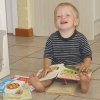
Two 'key ingredients' or preschool language activities are required in excessive quantities to ensure that children become good communicators as adults. 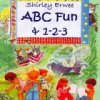
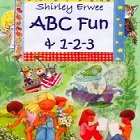
A preschool programme with nursery rhymes to learn each week, as well as a list of recommended, quality children's stories to read aloud together as you and your children adventure through the alphabet, one letter per week. All the hard work is done for you, just open up the book and start building your child's communication skills for life! Click here for more details: ABC Fun & 1-2-3 Nursery Rhyme Lists
Nursery Rhyme Games, Actions Songs, Tongue Twisters and Rhythm Activities Playing games with words rhyme helps phonics skills for reading. Performing actions to preschool songs develops gross motor skills and rhythm. 
Fingerplays aren't just fun to do, they also help children manipulate the muscles of the hand and develop their fine motor skills, which are required for school readiness. 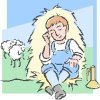
Preschool songs that involve counting are a fun way to re-inforce numbers and preschool math skills - concepts, like counting, time, measurement, position, volume, temperature etc... 
Bedtime Nursery Rhymes and Teatime Preschool Songs Integrate preschool songs throughout your day with these verses for special times of the day. 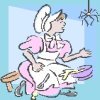
A list of favorite classic and traditional nursery songs and verses to build a rich cultural heritage. The colourful characters and vivid language have fascinated children for centuries. |
  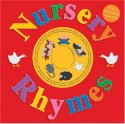 Best Books for Preschoolers and Parents Take a look at some of Shirley's children's and her favorite books, DVD's and toys!
|
||||||||
|
[?] Subscribe To This Site
|
|||||||||
|
Copyright © 2005-2020, Shirleys Preschool Activities.com All Rights Reserved. | |||||||||






New! Comments
Have your say! Leave a comment in the box below.