Developing Preschool Reading Skills
Get your kids hooked on books, develop preschool reading skills and ignite a love of literature, a desire to learn to read and enhance reading comprehension by reading with your kids.
In this article:
Introduction
Reading with Babies and Toddlers
Preschool Reading Skills
Children Ready to Read
The Benefits of Reading with Children
Introduction
The ability to read is an essential skill for learning, and if a child loves reading, she will become more skilled at it. This lifeskill will give her an advantage: She will gain not only knowledge, but also pleasure from the literature that she is able to read.
The converse is also true. A child who struggles to read, will struggle with conventional forms of learning and will always be frustrated when required to read. This could lead to all sorts of related problems which in turn may affect the child's self esteem and behaviour patterns.
Of course you want to prevent that scenario, so where and when should a parent begin to develop preschool reading skills and teach their child to learn to read?
Reading with Babies and Toddlers
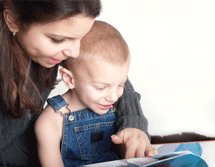
"Children are made readers on the laps of their parents." (Emilie Buchwald)
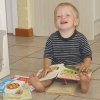
As soon as your baby is old enough to sit on your lap and read a book with you, you should begin developing preschool reading skills and getting her hooked on books! At this age your child is learning all sorts of things at an amazing rate and so you can use this time exploring books to create a good first impression, which will never be erased!
Even before she can speak, your little one can learn that reading is a time to cuddle up on your lap and spend precious moments together with you having fun and exploring the images in the books you share.
"You are not reading a book to a child; You are sharing a book with a child." (Jay Heale)
Babies learn by experience, so let the time you spend developing preschool reading skills become a touching, feeling, looking and listening experience. Obviously, you don't want your prize books to undergo the taste-test or get ripped apart, so keep them for use under supervision, but do let your child play freely with board books, cloth books and plastic bath books.
As she grows older, she will realise that these things get paged from one side to another, that the images have to be the right-way up and that recognizable objects can be represented by two-dimensional images on a page. She may still be far from the maturity required to read, but she is already developing essential pre-reading or basic preschool reading skills!
Your little tot will learn about reading even faster if she has good role models. If she sees you or other family members enjoying books, she will soon copy you when you sit down with one of those booky things! However, remember that initially a book will be just another thing to your child, so expect some damage and limit her contact with books to the sorts mentioned above, but do begin to teach her to handle them carefully and praise her for her efforts.
Some types of books for developing preschool reading skills with little ones:
- Family photo albums and books with real photographs such as those published by Dorling Kindersley.
- Touch and feel books that have parts that are textured or scented.
- Pop-up books that require manipulating flaps and moveable parts.
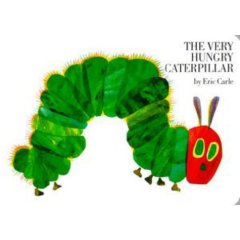
- Squeaky books and books with holes in the cardboard pages. The Hungry Caterpillar by Eric Carle is a lovely, holey book!
Buy from Amazon.com
It's an exciting moment when your child recognizes and names a picture in a book for the first time! Her cognitive and linguistic skills have reached the point when she can begin to play naming games. This is not only fun with books, but she has learnt that images in books convey meaning.
There are plenty of books that are aimed at just this naming stage - animal books, books about food, transport, alphabet picture books, baby's first picture book, etc.
As your child's linguistic ability grows, begin to talk about the actions and events in the story books you read. Ask questions like, "What is (the character) doing?", "Where is she going?" and "What do you think is going to happen?" etc.
Experts say that until the age of about 7 or 8 years, many children struggle to differentiate between fantasy and reality, between true stories and fiction, so choose the books you read to your children carefully.
I prefer to avoid traditional children's fairytales with their supernatural or super-evil characters at this stage! Later when the children are older and able to discern between fiction and reality, they may be acquainted with this genre of our literary culture.
In fact, at age 5, one of my children asked me to stop reading The Wizard of Oz as he did not like the parts about the wicked witches. He found it too scary!
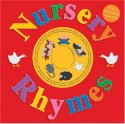
From a young age, you should regularly read nursery rhymes and poetry to your children. Poems and rhyming verse will help to develop your child's listening skills as words are used to paint pictures. These are also preschool reading skills. There are many other
Benefits of Nursery Rhymes
.

Buy from Amazon.com
As you and your child share more and more books and as your child matures, she will start to learn that you read a book from front to back, that you read the black and white 'thingies' that are printed on the pages, that you read from top to bottom and from left to right, that the printing is words and that the words convey pictures and meaning. They will also learn that stories have characters, action, a plot, a beginning, middle and an ending.
By now your child should already be falling in love with and getting hooked on books!
Top of Preschool Reading Skills
Preschool Reading Skills
As your child matures and her preschool reading skills develop, you will be able to share books with more complex story lines. Picture books will still be favourites, but they will also enjoy appropriate chapter books that you read aloud.
Busy books those books with pictures filled with dozens of characters and objects are also fun to encourage the children to talk about as are text free books, which require you or your child to make up the words and tell the story yourself.
Since your child's concentration span will be increasing, she may also enjoy listening to stories on tape, especially when traveling in the car.
By now, your child may begin to recognize letters and numbers and you may be tempted to begin actively teaching her preschool reading skills. Some children have been known to read as early as age 4, but these are the exceptions.
Before you rush to give your child what you think is an advantage, be sure to read the book
Better Late Than Early
, which I strongly recommend, or at least my article based on their research and my own,
Don't Start Too Early
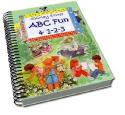
. And read the review of my preschool teaching manual,
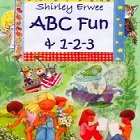
ABC Fun & 1-2-3
which will give age-appropriate learning activities that you can do with preschoolers to develop preschool reading skills.
Picture books that my children have loved to read over and over:
Richard Scarry books
Kalinzu and the Oxpeckers
How it was with Dooms
The Story about Ping
Tabby the Wild Cat
Jesse Bear, What Will You Wear?
A House for a Hermit Crab
The Little House
Mama, Papa and Baby Joe
Fly, Eagle, Fly!
Chapter books for reading with children:
Grandma's Attic
Granny Han's Breakfast
Twenty and Ten
Mr Popper's Penguins
Search for them on Amazon or Kalahari, by using the links below:
Top of Preschool Reading Skills
Ready to Learn to Read
"Kids need to see their parents reading, and they need to be
read to themselves as early as possible. Young school-aged
children benefit from responsive reading of stories with
their parents. Such literacy-nurturing activities have been
shown repeatedly to foster optimal language development."
(Mel Levine, A Mind at a Time, p 148)
There are probably plenty of websites or books available
claiming to be able to test or tell you when your child is
ready to learn to read, but if you have been reading with children since babyhood, she will already have been developing preschool reading skills for a long time already.
As a mom I have noticed that my children are ready to learn
formal reading when they themselves begin to show an
interest in deciphering the letters they see around them or
show an interest in writing. Usually one of the first words
a child learns to read and write is her own name and this
seems to me a more logical place to begin than at the
beginning of the alphabet. This is why the first words in my
manual ABC Fun & 1-2-3 are "Don't start at the beginning!"
Once your child has become familiar with the alphabet and
the sounds that letters make (rather than the names of the
letters) she will be ready for more formalized phonics. A
great resource for parents is Ruth Beechick's The Three
R's.
Even when your children have all learnt to read alone, you should continue to read aloud together. Not only does this reading with children enhance
family relationships as you have a store of shared memories
and stories read together, but reading aloud at any age also
results in other benefits.
If you're a homeschooling parent, or even if you aren't and you'd like to build a collection of quality story books for your children, consider investing in some great, age-appropriate children's literature from Sonlight Curriculum. Use the link below to see their fantastic online catalogue!
Top of Preschool Reading Skills
The Benefits of Reading with Children
These were written by a homeschooling dad and educational expert, Leendert van Oostrum of the Pestalozzi Trust, the South African Homeschool Legal Defence Association in an email communication:
"
...reading GOOD literature (of the kind
you present
in your programmes
) to children does much more ...
a) It teaches them to focus and develops concentration.
b) It develops auditory perception - to hear what is said.
c) It builds their vocabulary. Almost all writers will use words that your family and friends do not. We have found that this helps a great deal when the children start reading - they read familiar words with much greater ease than strange ones.
d) It develops their grammar, in similar manner.
e) It gives them ideas to think about. Ideas are what the mind eats - "mind food", in other words.
f) Due to the above, it develops their cognitive ability (i.e. it improves their IQ)
In fact, there is evidence that it actually improves brain
capacity - especially if you read in more than one language.
g) It develops their imagination. Imagination is the ability
to produce many scenarios from one set of facts. That is
creativity. Creativity is the basis of effective problem
solving. Effective problem solving is necessary for
entrepreneurship and every other endeavour that can not
(easily) be computerized.
h) In conjunction with narration, it teaches the ability to distinguish the important ideas in a text from the less important and to place the important ideas in a logical sequence (analytic thought / logic). It teaches the ability to formulate and articulate their thoughts about those ideas (synthetic thinking / rhetoric)."
So before you reach for the remote, grab a book and get them
hooked!
"For hours when children are lost in a book, you know they
are in the best hands. They are wandering the riverbank or
jungle, exploring Narnia or Dickens's London. Unlike
television, that does their imagining for them, reading
fills children's minds with faces and place they must
picture for themselves. It enables them to create their own
imaginary adventures, even to understand someone better, or
see things differently." (Lesley Garner)
Click here for a list of
Reading Skills
that a child must master to move from being a beginner to a mature reader that reads fluently.
Click here for a list of online
Reading Games for Preschoolers
at www.kids-games-for-playing.com.
Top of Preschool Reading Skills
Preschool Reading Skills l Home l
Preschool Curriculum l
Readiness Activities l
Songs & Rhymes l
Ideas by Subject l
Free Ezine l
Preschool Science Activities l
Free Menu Planner l
Homeschool Help l
Free Kids Games l
What's New? l
Free Gifts l
Printable Worksheets l
Lesson plans l
About Shirley l
Contact Shirley l
Free Preschool Activities l
Art Appreciation l
When is Mothers Day l
Preschool Themes l
Free E-courses l
Shirley's Blog l

|